
If the second coming of Christ is real, it happened about 17 years ago, two days before Christmas, when Armand Hammer was immaculately conceived at Park Slope’s grailed and long-defunct Southpaw. Uncommon Nasa and billy woods were hosting Yule Prog, a local hip-hop showcase and festival the rappers and label owners had been running for, by then, three years. woods hadn’t heard the headliner yet and wouldn’t until E L U C I D, an acidic and brooding then-mid-twenties rapper, hit the stage that night. He was blown away. So much so that woods followed him backstage to introduce himself, his voice loud and excited, booming over a packed green room. It left an impression on E L U C I D, too. Four years later, Armand Hammer was born.
woods knew he saw something special that night but, after many failed attempts, wasn’t expecting to form another rap group. Working with E L U C I D seemed to force a reconsideration. In 2012, woods invited E L U C I D into producer Willie Green’s kitchen to record a feature for History Will Absolve Me. “I was like, Damn, I think he killed me on my own track,” woods remembers. “Did another one, and then it was just one of those situations where I was really gun-shy about being in a group again. But I was just like, ‘There’s a real opportunity here.’”
“Freedman’s Bureau” and “Sour Grapes” were the results of that session, but it was hearing “Pompeii” that sold E L U C I D on a long-term partnership. “Everything sort of unlocked,” he says. “It was such a strong, focused, powerful song. I was just like, ‘Let’s go!’ And it’s been off to the races from there, for real.”

Photo by Ashes57
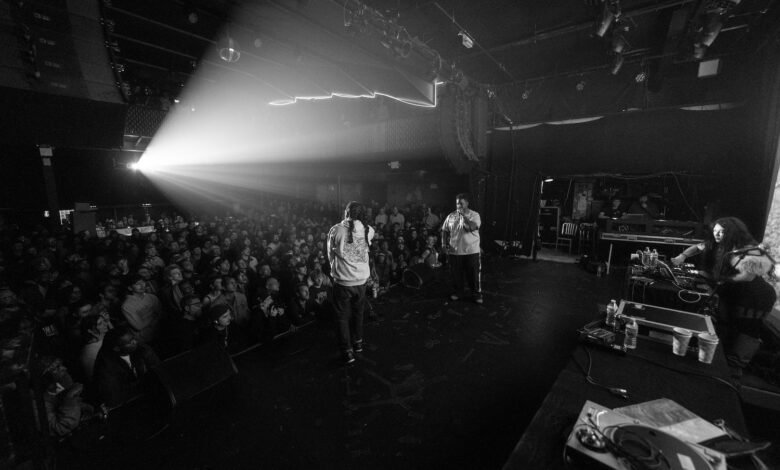
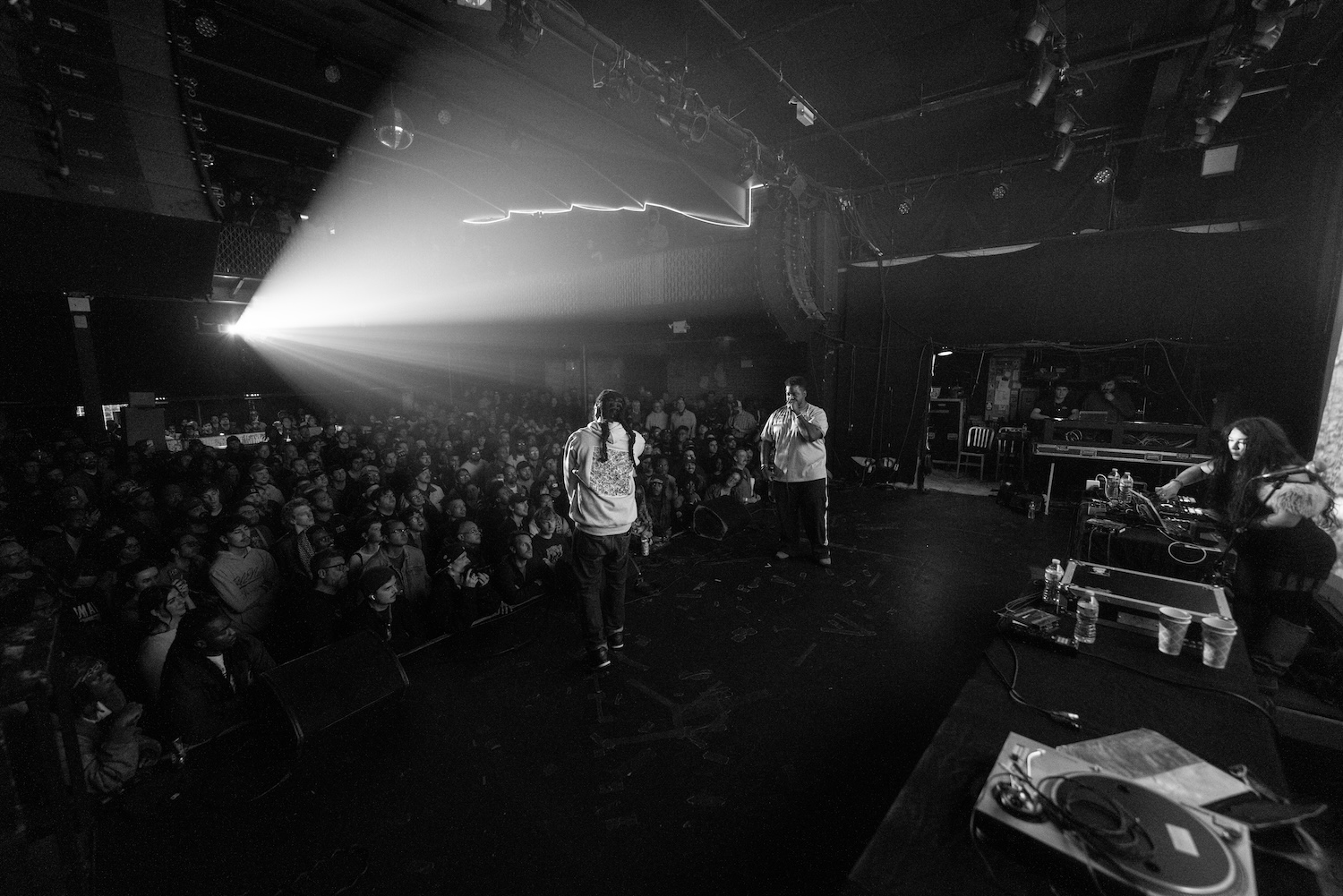
Fast-forward to 2026: Armand Hammer are powering through the final performance of their 22-date North American tour at Music Hall of Williamsburg (one of the last shows that venue will ever host), with ferocious intensity and intention. It’s a roaming 85-minute synechdoche of the duo’s discography and the raps they’ve accumulated over a decade and a half of working together, guided by DJ Haram’s dwimmercraft on the decks. The crowd is nirvanic.
“The Armand Hammer guys are like family and are a part of what makes Brooklyn feel like home to me,” DJ Haram—who, at one point, had me hand-deliver to the stage what felt like an absurdly massive box of Joe’s during a performance of the debaucherous woods cut “Misery”—tells me after curtain call. Now hours since they closed the show, I spot the group behind the merch stand, steadfastly signing records and graciously greeting fans in a room still crowded at one in the morning. “I’m happy to see them continue to grow and succeed, and I’m grateful to be a part of it,” she continues. “It’s easy to make music work out if you’re at the top making big bank, or if you’re making no money and doing it as a hobby. But there’s this increasingly difficult middle ground, the in-between. Sometimes with more success comes more responsibility. You can’t eat visibility. The grind is nonstop. Armand Hammer will remind you on every album that they’re a working-class duo for sure, but they really are out here making sacrifices to create and share art that is unrivaled in imagination, quality, and integrity.”
In the 13 years since their debut project, the group has worked with underground darlings like The Alchemist, Earl Sweatshirt, JPEGMAFIA, and Pink Siifu. They’ve also cracked the code on consistent critical praise as solo artists. But it’s their joint projects that tend to feel like proper events, the culminations of countless deliberate and accidental creative exchanges with local and global artists every bit as bleeding edge and preternaturally experimental as they are. In 2024, We Buy Diabetic Test Strips landed on nine separate best albums of the year lists. It had 10 additional contributors, several of which joined them on their latest tour. During their Tiny Desk Concert earlier this year, the group tucked in behind Bob Boilan’s L-shaped corner table flanked by a live band, with producer Kenny Segal, a recurring accomplice in the Armand Hammer cinematic universe, on keys.

Photo by Ashes57
Curly Castro, who opened the show at Music Hall, appeared on the duo’s first mixtape, Half Measure. He’s been dubbed by fans as Armand Hammer’s honorary third member. He still marvels at their success. “It’s been uncanny, but well-deserved, to watch and witness the growth,” Curly Castro says. “They could rest on their laurels and fan-service, but they never succumb to that. Their journey has been inspiring, to say the least, and I beam with pride for all that my brothers have accomplished.”
The group once again assembled some of its chronic comrades on Snakes & Ladders, their latest album, which was surprise-released just four days before the show. It’s produced by Segal and enigmatic Baltimore beat maker Messiah Musik, who have both been in the mix with woods and E L U C I D for over a decade. It riffs, cyclically, on fatherhood and raising their kids, new(ish) roles not terribly different from the ones they’ve had developing artists for woods’ independent label Backwoodz Studioz. Both require “patience” and “the understanding that sometimes you’re dealing with amazing people who are not grounded in reality,” woods explains.
So “it takes a village,” isn’t just a parenting platitude for Armand Hammer. For them, building community is innate to the commitment. “I’m a loyal person, and it’s awesome to still go down the road with people you know,” woods says. “If you see me doing something with somebody for a long time, there’s a good reason. That’s generally how I live my life.”
E L U C I D also appreciates the relationships that form when you collaborate with someone for so long. “There might be stumbling blocks with language and commuting ideas on how to get to the actual core [in the beginning]. But as you get to know somebody, that shit shortens, and you can develop something where it’s like, Damn, you did it before I could even ask.“
The post It Takes a Village: Armand Hammer’s Powers of Chronic Collaboration appeared first on BKMAG.
Source link