
Updated at 7 p.m. March 4.
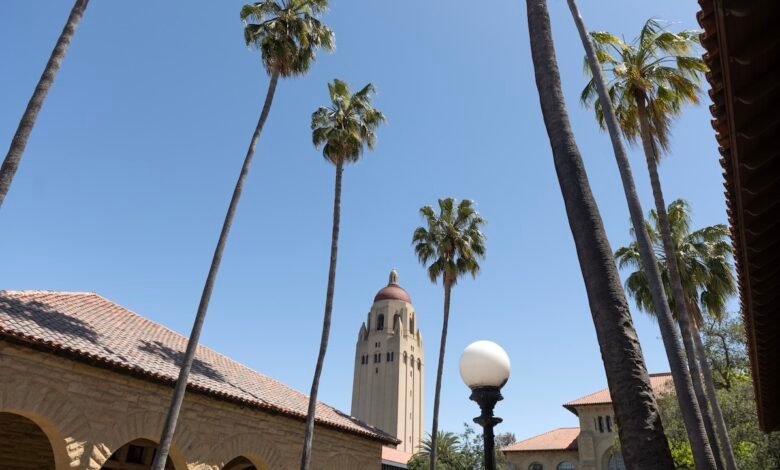
Stanford University officials are working with federal authorities investigating a series of “threatening and harassing” emails sent over the past five days to Jews on the university campus, with messages that in some cases included personal information about the individuals.
“The nature of some of the threats was really vile, personal and direct,” Rabbi Dov Greenberg told J. “It looks like somebody who knows what’s going on and is involved in the community.”
Greenberg, who leads the Stanford Chabad, received an email on Sunday with the subject line “The coming Holocaust 2.0?” that included detailed knowledge of campus Jewish life. On Wednesday afternoon, he received another email with the subject line “On the 1st amendment and its (apparent) limits imposed by Jewish snowflakes.”
Emails with at least four different messages, each containing aggressive and conspiratorial claims and language, were sent to Jewish leaders and students over the past five days including on Sunday, a day before Purim.
First reported in the Stanford Daily campus newspaper, the emails promoted antisemitic tropes about power and influence, made threats against the Jewish community at large and targeted individual students, including implied threats of sexual violence against female recipients. All were sent by the same encrypted Proton Mail address.
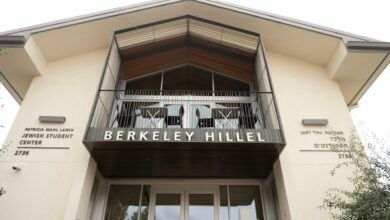
According to the Stanford Daily, the recipients included two of its non-Jewish staff members, as well as Jewish students and leaders at Hillel at Stanford, Stanford Chabad and the Taube Center for Jewish Studies, among other departments.
The FBI and other law enforcement agencies are looking into the matter, according to a March 2 statement from the university.
In one email, the sender or senders claimed to be part of a Europe-based “watchdog” organization made up of Stanford alumni who threatened to “monitor” Jewish community members’ behavior, according to the Stanford Daily.
Another, more concerning email contained “acute credible threats against the personal safety of Jewish Stanford undergraduate and graduate students,” the Daily reported.
In the first message to Greenberg, the sender claimed to have attended a Shabbat dinner and a prayer service, mocking the gatherings.
“The investigation needs to play out, but whatever the source, it is scary and disturbing when something like this happens,” Hillel’s Rabbi Jessica Kirschner told J. in an email.
While authorities have not confirmed yet whether the sender or senders were actually present at campus events, the references have heightened unease within the Jewish community. Several students who received the emails declined to comment publicly.
“I spoke to some of the students that received emails,” Greenberg said. “The reason why students don’t want to speak [on the record] is because they’re afraid of being personally singled out and threatened, because some of the emails went to specific students, with focused threats to the students themselves.”
The “Holocaust 2.0” message to Greenberg accused the Stanford Jewish community of having a “persecution complex” and participating in “infighting about who’s Jewish enough.”
“The victimhood thing, guys, pick a lane,” the email said. “You can’t simultaneously run half the venture capital on Sand Hill Road AND claim you’re marginalized.”
The message also contained curious language about Zionism. “The wind is shifting in a direction your great-grandparents would recognize before you do, because you’re too busy arguing about denominations to notice that ‘antizionist’ is becoming a real convenient costume for plain old Jew-hate,” it said.
The message then shifted in tone, invoking Jewish unity before abruptly turning to an explicit statement celebrating the “hypothetical” deaths of Jewish students.
“L’Chaim means ‘to life.’ Start acting like that’s a dare and not just a toast. Just, kidding [sic] if you all died of the flu tomorrow, hypothetically speaking, it would be a major win for the world and for the cleansing of human genetics,” the message concluded.

The incident follows a troubling recent history of antisemitism and anti-Israel activity at Stanford, especially since the outbreak of the Israel-Hamas war. Incidents include intense pro-Palestinian protests and a monthslong tent encampment, alongside a 2023-2024 university report documenting dozens of cases in which Jewish and Israeli students said they felt unsafe. There have been multiple discrimination complaints and lawsuits, and in March 2025 a federal warning placed Stanford among roughly 60 universities under Title VI scrutiny for potential antisemitic harassment.
In response to the emails, Jewish student organizers intensified security at campus Purim events this week. No incidents were reported.
At one of the events, at Stanford Chabad, more than 150 students gathered to hear the Megillah, followed by dancing and communal celebration, Greenberg said.
“The most powerful response to antisemitism is for the Jewish people to be proud of their Jewishness, to be more confident, to walk taller, to celebrate all beautiful things that Judaism represents,” he said, “and not to be fearful, and not to cower, not to be afraid.”