

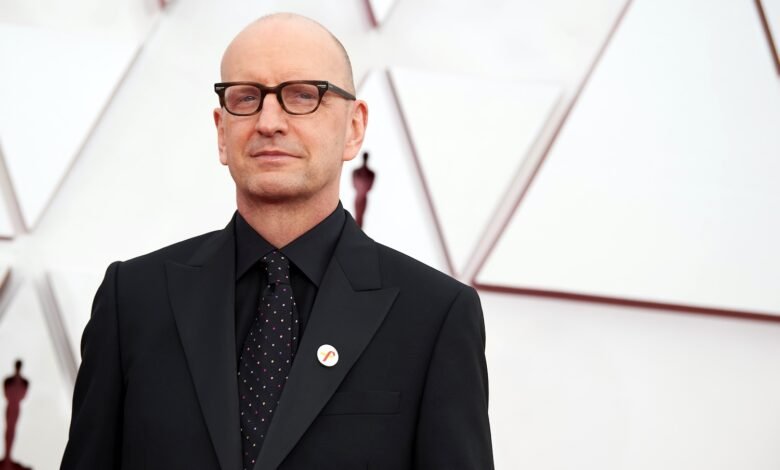

Starting this week in Brooklyn, Steven Soderbergh is launching yet another wildly unconventional and ambitious project in the world of cinema. Consensus-challenging work is nothing new for the director, who has made 29 movies since the year 2000, when one of the two films he was nominated for making in a calendar year netted him “Best Director” at the Oscars.
His filmography is impossibly diverse, a random genre/concept generator that spits out star-packed heist films, ghost flicks, economic polemics, psychosexual spy thrillers, the Academy Awards ceremony, a movie that predicted the global pandemic, Tarkovsky remakes, Werther’s Original-core “ladies on a cruise” comedies, an alternately depressing and thrilling character sketch trilogy centered around a male stripper in Tampa he only directed parts one and three of, and a two-part, four-and-a-half hour biopic of Che Guevara—all steeped in the language of a cinephile who packs an idea and often a reference into every frame.
This is a long way of saying Soderbergh has a voracious intellect paired with an obsessive work ethic, utterly unafraid of experimentation with both form and function in all aspects of his creative life and work that he brings to every project, including the promotion of his 500–year-old brandy, Singani 63, that he discovered in Bolivia shooting the aforementioned Che Guevara epic on location. In promotion of that brand, and his recent 63rd birthday, Soderbergh and the local mini-theater/restaurant chain Nitehawk are embarking on a months-long residency that will include a Soderbergh-curated selection of nine of his favorite films that had the greatest impact on him as a filmmaker. He has selected one film from every decade going back to the 1930s, and each screening (alternating between Nitehawk’s Williamsburg and Windsor Terrace locations) will include a three-minute, to-the-camera monologue featuring Soderbergh talking about the film in question. There will also be a happy hour before each screening featuring a new, custom Singani cocktail made in collaboration with some of the best bars in New York, including Greenpoint’s Little Rascal.
What I appreciate about the series is that it provides a new way to contextualize and think about one of my favorite filmmakers. Each selection prompts a Soderbergh fan to consider each film in relation to the director’s diverse filmography. You think about Soderbergh’s interests and style in conversation with Hitchcock and Joseph Losey, and how you can see traces of his work in Sophia Coppola and Paul Thomas Anderson. You suddenly notice The Lubitsch Touch has its fingerprints all over George Clooney and Jennifer Lopez’s Out Of Sight meet-cute in the trunk of a car, how Black Bag is a perfect inversion of Burn After Reading, and how Soderbergh and the Coens and Spike Lee all crawled out of the same primordial goo of postmodern 1980s American independent cinema.
The other day, I got to fulfill what I wish I could call a lifelong ambition, but was too far-fetched to be something I could credibly claim to have thought to even want to do: Nerd out about movies with Steven Soderbergh for an hour. It was appropriately freewheeling and discursive, full of takes and brilliant analysis, and I decided to leave it (almost) all in to give the reader a taste of what will make the next few months of Wednesdays at Nitehawk so fun: The sensation of being on a Zoom call, shooting the shit and comparing notes with one of the greatest directors who ever lived.
(Author’s Note: This interview has been edited and condensed to make me sound like less of an asshole)
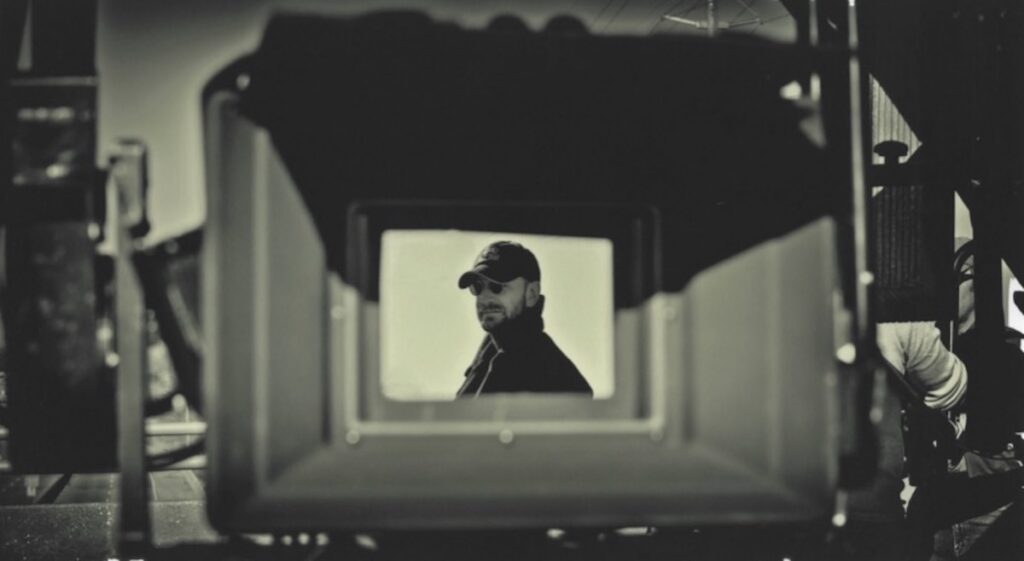
Photo by Claudette Barius
What was the germ of this idea?
Classic craven marketing ploy from the Singani team. We’re always on the lookout for ways to organically combine what I do during the day with, you know, the other business that I handle or am exposed to mostly at night. And so this was proposed, and I thought, okay, there’s an opportunity here.
I wasn’t thrilled about the idea of having to shoot these intros that will go in front of all of the films, because I don’t like being on camera, but it seemed to be a necessary component. And so I’m in the middle of recording those right now, and it’s about as pleasant as I thought it would be, because I want to do a good job and I want them to be additive and personable. They’re one-time-only things. The people who go to these screenings are going to be the only people that actually get to see these. So I’m trying to deliver, but I thought the idea was good enough to overcome my normal default, “No, not interested,” because I don’t want to be on camera.
Watching it evolve, watching the cocktails be born, and the partnerships that we’ve created with some of the accounts that we have in that area, has been really fun. And that’s always the fun part: The creative part. Watching mixologists take Singani and move it around in all these different directions. I won’t get to experience my favorite part, which is drinking all these cocktails. So it’s like all the bad stuff and none of the good stuff for me.
But it’s a good exercise. It’s not a bad thing to have to articulate why you like something. That’s part of giving people insight into where my taste comes from, because a lot of these films, the early ones, you know, I saw when I was very young, and they had a real impact on how I approach material creatively. I don’t know ultimately what people will take away from these little clips, but I know that the movies are good, so at the very least, they’ll have a pleasant experience in a movie theater.
How often do you actually get to go to a movie theater for screenings?
I try to mix it up. I have options within walking distance of where I live. I’m trying to keep that experience alive. Not only because I want to philosophically support that activity, but I think it’s good for you. It’s good for your mental health to go out, sit in a room with a bunch of people who are mostly strangers to you, and just stare at one thing for two hours. I think it’s good for your brain to indulge in that.
Not to be presumptuous, but I was thinking, for your media consumption diary that you put out every year, it would be cool to differentiate between the in-theater experiences and the things that you’re watching at home. Are there any theaters in particular that are your favorites?
It’s more about avoiding certain theaters. There are some where I find the experience so frustrating that it’s just hard for me to get past that. But generally speaking, it’s more about proximity than anything else. There’s a reason that there are more theaters in urban areas than in suburban or rural areas. It is this issue of being able to access a movie theater on foot. When you can walk to a theater, you get more traffic.
I was surprised that, for the Hitchcock, you went with Notorious over Psycho. I know with these kinds of programming series, you can be somewhat hemmed in by what prints are available and when you can get them. Were there certain films you wanted that were unavailable?
Luckily, nothing got kicked back. I was really surprised. Notorious was one of the things I was surprised about. I really wanted a Hitchcock film just because he’s such a giant influence on all filmmakers, and that’s probably my favorite. If it’s not, it’s tied for first. It’s a spy thriller, and I like spy thrillers.
Clearly.
I was surprised that we were going to be able to get Trouble in Paradise, because that’s not easily accessible. With Lubitsch, I was really pleased, because I wanted to get a comedy, and he is so foundational in building what we consider the modern situational comedy to this day. Lubitsch built a lot of these archetypes and setups. For people who aren’t familiar with him or aren’t familiar with that film, they’re going to recognize a lot of these situations and go, “Oh, that’s where that came from,” you know? I’m sorry that I won’t be able to witness people seeing them, especially seeing them for the first time. With the older titles, you never know if the studio struck a DCP, but I got everything I asked for, so I felt really lucky.
The filters were mainly self-imposed. For the selection process, we had to shrink the list of possible movies down from everything ever made to a number that I can wrap my head around. So they’re all in English. That was one of the big filters. Then I chopped it up into decades, and that was another filter. It’s very subjective. This is a list that only I would create and only for this specific task.
The two movies I watched to prep for this, which I hadn’t seen before, are The 5,000 Fingers of Dr. T and The Servant, both fascinating. When I saw Dr. Seuss wrote the former, I was like, What the fuck?
Of all the choices, that’s the one I wish I could watch people watch, because it’s just so strange. But, you know, I’ll have my moles there giving me a blow-by-blow.
I’m a really big Losey fan. I’ve seen his other two films with Pinter, but I hadn’t seen this one, and I was really blown away. Insane movie.
Yeah, I mean, I talk about that a little bit in the video. They had three collaborations, all of which are top-notch. I picked The Servant because it was the first of their collaborations, and it was a kind of film that people hadn’t quite seen before—this psychosexual chamber piece with all these class and power issues packed into it. It was a new thing. And it’s just my favorite of the three. It’s a really great illustration of Losey’s staging ability, how he choreographs the actors and the camera. For a film so localized, it’s a really visual movie.
I also picked it because it fits another of the series’ filters. It’s the sixties, restricted to my birth year. And there’s some good movies that came out that year, but I picked The Servant because Losey was a big influence on me. Anybody who has looked closely at how I move people around indoors can see it.
So I know it’s not going to be as clean as Do The Right Thing informed High Flying Bird, but are there any specific things you’re drawing from these films? This is a dumb hypothetical, but, for instance, maybe you thought of the great David Paymer in Ocean’s 13 as Bruce the Shark. Basically, were there any selections where you could say, “I took this idea, this device, the way I thought about this character from this film in the series,” in some obscure, abstract way?
Oh, sure, but I think what the larger point is in all of these films, what I realized I was looking for and that I wanted to recreate was intentionality about everything—that every shot and every cut has a purpose, and if you added one more shot, it would be one shot too many. And if you took a shot away, it would be diminished. That’s what all of these movies share, and that’s what I saw when I was young and starting to think about films as something other than entertainment, being on the lookout for intention in all areas. All of these filmmakers share a deep sense of consideration about everything.
It was really fun last week to go back and watch a lot of these films, because I haven’t seen them in so long. And one of those was Lost in Translation, which I hadn’t seen literally since it came out. And that was such a pleasure, to be reminded of how new Sophia’s aesthetic felt at that time. Even though she’d made another movie, I feel like Lost in Translation, maybe just because of the point of view of it, being so restricted in the locality of it, it just feels like, Oh, that’s where Sophia becomes Sophia full-blown. It’s all there. The use of music, the sense of fashion, the sort of impressionistic, elliptical editing, it was really fun to see it again. And as I was watching it, I realized I’ve just forgotten stuff, you know? It was 2003. And it was like rereading a book and being reminded of how great the author’s language was.
Tonight, I get to sit down and watch Do The Right Thing again, which I haven’t seen in decades. So that’ll be really fun.
Since you called it out, I was looking at Lost In Translation on the program and, in my literalist, dense way, trying to figure out what space this occupies in the context of your filmography. I don’t know if it’s a nod to Sarah Flack, or maybe, to speak to my initial question, if there’s something from your subsequent films, an idea or a mood or a tone or a character that Sophia inspired in something you did years later, or maybe immediately after.
I think in that case, it’s a reminder of… when subjectivity should be on the table. It’s about two people, but it’s sort of a depiction of her psychological and emotional state. I do view it as more her film than his, if only because it begins with the shot of her lying on a bed and not Bill Murray lying on a bed. But it’s just a reminder of subjectivity as a tool to pull you into a character’s experience and what’s available to you as a filmmaker to create that sense of immersion. That’s what I take away from that movie.
And also, people don’t have to fucking talk all the time, you know? It’s a movie. You can just show things, and everything doesn’t have to be spoken. Most pointedly, the last exchange in the film, which we don’t hear and don’t need to hear and shouldn’t hear—that’s a movie idea. That’s not an idea that works anywhere else. And so it’s more of that. To me, it was like, Remember, you’re making cinema. This is cinema, and you should be doing things with the medium that only cinema can do. Don’t forget that. Because it’s easy sometimes to get pulled into, “We only have a certain amount of time”, or, “Is this going to be clear enough for the audience?” There are a lot of things pulling you toward the middle, and you have to resist that.
So watching that movie again was to be impressed with Sophia’s commitment to creating a piece of cinema and not really worrying about whether everybody’s picking up on everything. That’s what multiple viewings are for.
It’s particularly fascinating for me, in retrospect, when you put it in conversation with Her, which has unfortunately become a documentary. But it’s also a really fun response record. Fargo is the 90s installment, so I’m wondering what your initial relationship to the Coen’s films were, and how they informed the movies that you’ve made?
Well, the Coens are tricky filmmakers to be influenced by, because if you’re trying to do something sort of like what they’re trying to do and you’re two degrees off, you may as well be 180 degrees off, and we all can name examples of that.
What I appreciate about them, and what I think has been an influence that I can take on without worrying that I’m going to drift off course, is a very committed approach to staging, and in which, again, there’s just not an extraneous frame. There’s not an extraneous shot when they lay a sequence out. They find that balance. There’s some people that do that, and it feels pre-chewed, and it’s not surprising, and it’s not exciting. It feels like all the work’s been done for you and there’s nothing for you to do except stare at it. And that’s not how you feel when you watch one of their crazy set pieces from Miller’s Crossing, you know? It’s extremely clear in its geography. You always know exactly where you are. And the thing that they do that I can’t duplicate because I’m not them, but I love—as a moviegoer—is this combination of pulpy narrative construction and screwball existentialism. And Fargo is a good example of that. The Man Who Wasn’t There is probably the most extreme example of that, which might be my favorite film of theirs. But it’s just this weird collision of passions or tastes, whatever you want to call it.
They clearly love James M. Cain, and they also clearly are interested in these deeper philosophical questions that we all grapple with about how we’re supposed to live and who we are supposed to be. And what is morality? And is it all a construct? Fargo, to me, is a really beautiful blend of those two interests. The fact that it followed The Hudsucker Proxy is interesting because there must have been some element of, “Hey, let’s get back to basics here. Let’s not forget what got us here.” And, you know, it turned out to be a classic.
But I think they bring a little bit of the Hawks and the Sturges and the Lubitsch back with them from Hudsucker and infuse some of that warmth and humor in Fargo, which is why it’s not Blood Simple.
Yeah. It’s a perfect film.
Last year, you finished drafts of Sotweed Factor, The Other Hamilton, Ascenso, and Bloodworth Manor. When did you change your mind about your idea that you are “not a writer”? Because it seems like you’re now doing a lot of writing.
Yeah, but I’m still not a writer. Having written doesn’t make you a writer anymore than having directed makes you a director. So, by my standards, I’m not a writer. I wrote to get in, and in this case, I was writing to get back in, because I thought the next two years of my life were going to be spent making a Star Wars movie. And so, in the immediate aftermath of that, my response was, “You better start getting some shit generated so you can go back to work.”
I’ve been reading things, but my gut reaction when that went south was you can’t wait for things to come to you. You need to make some things happen. So I just sat down and wrote one thing after another. I got in that zone of generating material to make something happen. I’ve picked one of those to pursue. I don’t want to jinx it yet because it’s not set up. But the purpose was to essentially get in a time machine and pretend this is pre-1989. I’m starting over again. Back then, I would just write one thing after another, hoping that something would stick, and it turned out to be Sex Lies. And I’m kind of doing the same thing again.
Since you brought up Star Wars, I was reading the Kathleen Kennedy exit interview again before we got on the call. I think what surprised a lot of people from the outside was that it appears it was basically a green light, and then essentially the head of Disney kills it for “story reasons,” which has never stopped them from doing anything in the Star Wars universe. And I was wondering if that elucidated anything for you? Did you know how disappointed she was?
No, it was no surprise that she was frustrated. We were all frustrated. You know, that was two and a half years of free work for me and Adam and Rebecca Blunt. When Adam and I discussed him talking about it publicly, I said, “Look, do not editorialize or speculate about the why. Just say what happened, because all we know is what happened.” The stated reason was “We don’t think Ben Solo could be alive.” And that was all we were told. And so there’s nothing to do about it, you know, except move on.
And as I posted, I’d kind of made the movie in my head, and just felt bad that nobody else was going to get to see it. I thought the conversation was strictly going to be a practical one—where they go, what is this going to cost? And I had a really good answer for that. But it never even got to that point. It’s insane. We’re all very disappointed.
So with Jaws, I saw that you finished a draft of Production 02074 last year. Is its inclusion in the series tied into upcoming promotion of anything surrounding it?
Well, it’s done, and it was a book, but now it’s an app. Because I’ve reconstructed every day of shooting, so you’re going to be able to scroll through the app and see screen grabs of every shot they got that day, so you can really see him building the movie piece by piece. And then there’s 25,000 words of me talking about the film. That’s the part I’ve been working on for a long time.
It started out as a book about directing in general, and then became a book about the shooting of Jaws, which allows me to digress whenever I want to, to talk about directing in general. I’m waiting, literally as we speak, I’m supposed to get a beta version of the app that I can navigate and look through and give notes on. But I would have chosen it for this regardless, because it was the movie that made me want to make movies. Before I saw that film, a movie was something you went to see and be entertained by, and as soon as I got out of that film, movies were something you could do. I was switched on, and I think that movie fulfilled that function for a lot of young filmmakers.
And as it turned out, there was a real reason for that, because it’s a classic, but it also has in it, or I was convinced that it had in it, the double helix of how to direct a movie, because it has everything. It has shots that last 27 frames. It has shots that last three minutes. It has humor. It has pathos. It has tension. It just has everything, you know? Like, if you were literally going to give somebody a directing tool kit, it’s a pretty good movie to start with because it’s got every sort of directorial approach that you might need to make a movie, except for the fact that it’s linear.
I was lucky because I saw it for the first time a couple of weeks after my, to that point, lifelong dream and ambition of being a professional baseball player died. And as a kid who had a somewhat obsessive personality, I was bereft. I was in a place where I was really open to something reaching in and becoming a new obsession. So, in that theater in St. Petersburg, Tampa, that summer where I’d been shipped off to see my grandparents and cousins and aunts and uncles, I got transformed. And it turned out to be lucky that it was that movie because to this day, you know, I can point out the things in almost anything I’ve made and trace it back to something that was in that film.
The post Inside Steven Soderbergh’s Nitehawk Takeover appeared first on BKMAG.