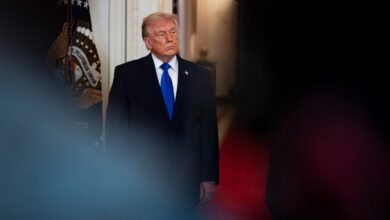


President Donald Trump said Saturday that the removal of Venezuela President Nicolás Maduro from power will open the door to the country’s vast oil reserves, a move that has the potential to reshape the global energy market.
“We’re going to have our very large United States oil companies, the biggest anywhere in the world, go in, spend billions of dollars, fix the badly broken infrastructure and start making money for the country,” Trump said in a public address.
“They were pumping almost nothing by comparison to what they could have been,” he said.
Trump’s comments came just hours after a stunning raid early Saturday in which U.S. armed forces and law enforcement captured Maduro and struck parts of the capital, Caracas.
Defense Secretary Pete Hegseth commended U.S. military forces for conducting an overnight operation to arrest Venezueulan President Nicolás Maduro and his wife. “Our adversaries remain on notice: America can project our will anywhere, anytime.”
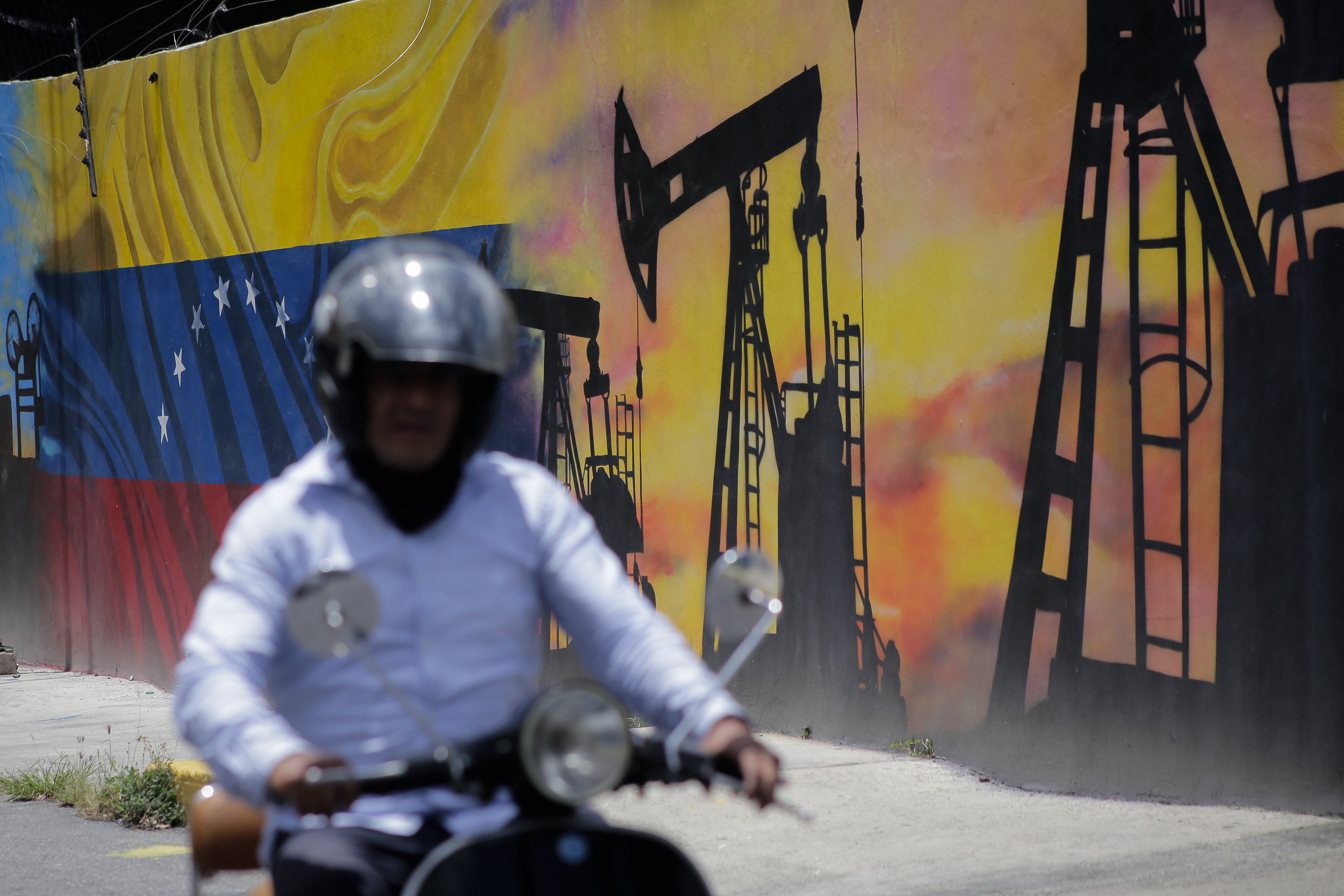
Venezuela’s vast oil reserves are the largest in the world, likely the equivalent of about 300 billion barrels, according to the Energy Institute, a research firm. Its reserves top those of even the No. 1 OPEC oil-producing country, Saudi Arabia.
But doing so would likely require years of work and sizable investments to modernize its industry, according to the U.S. Energy Information Administration, something that will also require a certain level of political stability. Trump said in his public address that the U.S. would “run” Venezuela for the time being but did not specify who would be involved or how.
“We built Venezuela’s oil industry with American talent, drive, skill, and the socialist regime stole it from us,” Trump asserted. “This constituted one of the largest thefts of American property in the history of our country.”
Trump said the embargo he imposed on Venezuela oil remains “in full effect.”
“They stole our oil,” he added. “They took it over like it was nothing.”
“We’ll be selling large amounts of oil to other countries,” Trump said when he was asked how controlling Venezuela’s energy supply could impact relations with China, Russia and Iran. “We’re in the oil business. We’re going to sell it to them.”
Venezuela has for decades enjoyed a level of economic success thanks to its oil, which it supplies to a variety of trading partners. Currently, China is Venezuela’s top oil customer, according to analysts, but due to the secretive nature of some of those exports exact data is hard to come by.
Any U.S. effort to gain access to Venezuela’s oil could also further inflame tensions with China, which issued a terse condemnation of Maduro’s removal.
“Such hegemonic acts of the U.S. seriously violate international law and Venezuela’s sovereignty, and threaten peace and security in Latin America and the Caribbean region,” China’s Ministry of Foreign Affairs said Saturday. “China firmly opposes it.”
Chevron is the only U.S. oil company that operates in Venezuela, under a limited license issued to it by the Trump administration. Under a more involved plan like one envisioned by Trump, more companies would likely need to enter the country.
“Chevron remains focused on the safety and wellbeing of our employees, as well as the integrity of our assets,” a company spokesperson said on Saturday morning. “We continue to operate in full compliance with all relevant laws and regulations.”
Major U.S. involvement in Venezuela’s oil sector could be transformational for the industry and energy markets, although establishing the infrastructure to drill, store and export that oil could take years to materialize.
Venezuela’s vast reserves are highly concentrated in one part of the country. Tapping that supply would be technically feasible but likely very costly due to years of decay that the country’s energy infrastructure has suffered due to an economy weakened by strict U.S. sanctions.
“Most of Venezuela’s proven oil reserves are extra-heavy crude oil,” according to research from the U.S. Energy Information Administration.
“The extraction of extra-heavy crude oil requires a higher level of technical expertise, which international oil companies possess but their involvement has been limited by international sanctions,” the agency said. “Furthermore, budgetary constraints at Venezuela’s state oil company PDVSA and a lack of qualified technical personnel and foreign direct investment have all hampered Venezuela’s oil and natural gas development.”
Secretary of Defense Pete Hegseth discusses the U.S. mission in Venezuela that captured Nicolás Maduro and his wife.
Due to those sanctions and budget restraints, PDVSA is still the largest source of revenue for the Maduro government.
The infrastructure is decades old, though, made more difficult by the extra-heavy crude oil. The EIA estimates that many of Venezuela’s oil pipelines are more than 50 years old.
Restoring the country’s oil production to just 1990s levels would require more than $8 billion in investments, EIA said, citing PDVSA estimates.
“The bones of a terrific oil industry are certainly there,” longtime oil industry analyst John Kilduff told NBC News.
“There could be a small bump in their output over the next six months,” Kilduff added, noting that the extra production could help with the recent downward trajectory in gas prices for consumers. “So yes, U.S. consumers could see a further decrease at the pump on top of what they’ve already been seeing over the past several months.”
“Venezuela oil is of a special grade. It’s very heavy and sour, particularly well suited for U.S. Gulf Coast oil refineries,” he said.
For now, the market impact is unclear. Crude oil does not resume trading until Sunday evening.
Terry Haines, founder of Pangaea Policy, said in a note on LinkedIn that oil prices will likely react “negatively, since [the market] will see increased supply as likely.”
Source link